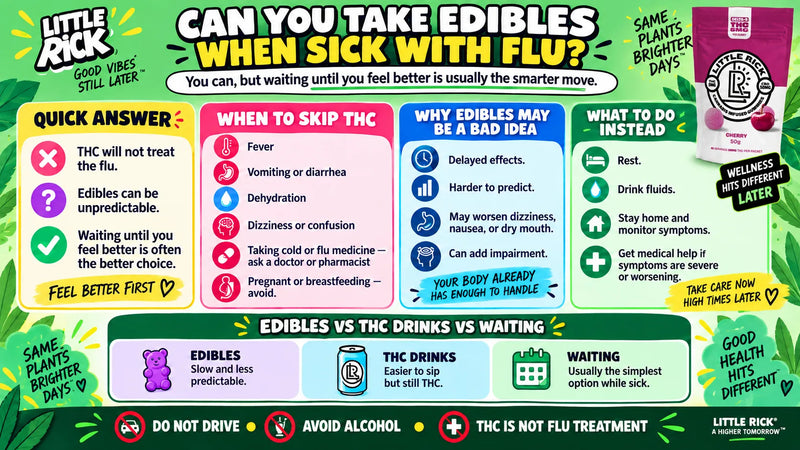
En la mayoría de los casos, no deberías consumir bebidas con THC en el trabajo, a menos que tu empleador lo permita claramente y tu puesto no sea de seguridad crítica.
Aunque los productos con THC derivado del cáñamo estén disponibles en tu estado, los empleadores aun así pueden tener políticas de lugar de trabajo libre de drogas, y el THC podría aparecer en una prueba de drogas.
En otras palabras, “legal para comprar” no es lo mismo que “seguro para el trabajo”.
El Departamento de Trabajo dice que los lugares de trabajo federales, los contratistas federales con contratos de más de $100,000 y quienes reciben subvenciones federales deben implementar un Programa de Lugar de Trabajo Libre de Drogas.
Respuesta rápida: ¿puedes consumir bebidas con THC en el trabajo?
Normalmente no; no deberías tomar THC durante tus horas de trabajo.

La única excepción de bajo riesgo sería un lugar de trabajo que lo permita claramente, un puesto que no sea de seguridad crítica y una situación en la que estés completamente fuera de servicio. Incluso así, sigue existiendo el riesgo en las pruebas de drogas.
Ten en cuenta que derivado del cáñamo no significa “aprobado para el trabajo”. Un producto puede ser legal para comprar, estar prohibido por tu empleador, ser inseguro para usarlo mientras trabajas y además ser un riesgo según las políticas de pruebas de drogas del trabajo.
Durante el horario laboral, el THC rara vez cumple con las cuatro cosas.
Por qué las reglas sobre el THC en el trabajo son distintas de las leyes estatales sobre el THC
El THC y las bebidas con THC son legales en EE. UU., pero las leyes estatales y las reglas del trabajo van por carriles muy distintos.
Un estado puede permitir la marihuana recreativa o las bebidas con THC derivado del cáñamo, y aun así tu empleador puede prohibir trabajar bajo sus efectos, tenerlas o usarlas durante el trabajo.
Sí, el panorama legal se siente complicado.
La Conferencia Nacional de Legislaturas Estatales da seguimiento a las políticas sobre cannabis y empleo, y muestra lo distinto que manejan los estados las protecciones laborales, el consumo de cannabis fuera del trabajo y las barreras para los posibles empleados.
Algunos estados protegen cierto consumo fuera del trabajo. Otros les dan más flexibilidad a los empleadores. Los contratistas federales, las industrias reguladas y los puestos de seguridad crítica pueden ser más estrictos, porque la ley federal sigue aplicando.
Legal para comprar no significa legal para usarlo en el trabajo
Puedes comprar alcohol legalmente y aun así te pueden despedir por tomar en tu escritorio, ¿verdad?
El THC debería tratarse igual, y muchas veces con más cuidado, porque las pruebas de drogas añaden otra capa más.
La hora de la comida no borra mágicamente las reglas de la empresa. Si tomas THC y luego regresas a llamadas, clientes, manejar, equipos o decisiones, sigues llevando el consumo de THC al trabajo.
Durante el horario laboral, normalmente manda la política del empleador
Las reglas de tu empleador normalmente controlan lo que pasa durante el tiempo de trabajo pagado. Antes de acercar bebidas con infusión de THC a cualquier cosa relacionada con el trabajo, revisa los documentos aburridos:
-
Manual del empleado: busca menciones de cannabis, marihuana, THC derivado del cáñamo o cáñamo intoxicante.
-
Política de lugar de trabajo libre de drogas: algunos empleadores tratan el THC como una sustancia prohibida, incluso donde es legal.
-
Política sobre trabajar bajo los efectos: podría prohibir trabajar afectado, incluso sin una prueba positiva.
-
Política de seguridad: las reglas pueden ser más estrictas con vehículos, herramientas, maquinaria, pacientes o clientes.
-
Política de trabajo remoto: la casa no siempre significa “fuera de servicio” durante el horario programado.
-
Política de pruebas: revisa las pruebas previas a la contratación, aleatorias, posteriores a un accidente y por sospecha razonable.
¿Las bebidas con THC pueden salir en una prueba de drogas del trabajo?
Sí, las bebidas con THC podrían salir en una prueba de drogas del trabajo.
A la mayoría de las pruebas no les importa si el THC vino de una bebida, una gomita, un vape o un comestible. Buscan THC o metabolitos del THC.
El THC derivado del cáñamo sigue siendo THC. Una bebida con 5 mg de THC no es automáticamente “segura” para una prueba. La dosis, la frecuencia, el metabolismo, el momento, la composición corporal y el tipo de prueba pueden influir en si una prueba detecta el THC.
BUENA LECTURA: Cuánto tiempo permanecen las bebidas con THC en tu sistema
El DOT es especialmente claro para los puestos de transporte regulados. Dice que el uso de CBD no es una explicación válida para una prueba de marihuana positiva confirmada, y que los empleados en puestos de seguridad crítica deben tener precaución, porque los productos con CBD pueden dar resultados positivos de THC.
¿Una bebida con THC derivado del cáñamo podría hacer que no pases una prueba de drogas?
Sí, es posible que una bebida con THC derivado del cáñamo contribuya a un resultado positivo en una prueba de drogas.
El origen no vuelve invisible la molécula. El THC delta-9 sigue siendo THC, aunque se derive del cáñamo.
Si tu trabajo depende de salir limpio en las pruebas, trata todos los productos con THC intoxicante como un riesgo.
¿Las bebidas con THC de dosis baja también tienen riesgo en las pruebas de drogas?
Sí, las bebidas de dosis baja también tienen riesgo en las pruebas de drogas. Una dosis más baja puede reducir qué tan high te sientes, pero no garantiza que no salgas positivo.
“Solo tomé 5 mg”, o cualquier otra dosis de bebida con THC, puede importar para tu noche, pero quizás no importe lo suficiente para la prueba del trabajo.
¿Y si tomas THC mientras trabajas desde casa?

Trabajar desde casa no hace que el THC esté bien automáticamente. Si estás en tu horario de trabajo, tu empleador aun así podría esperar un desempeño sobrio, decisiones claras y que cumplas con sus políticas.
El trabajo remoto reduce algunos problemas relacionados con la propiedad de la empresa, sí, pero no elimina los problemas de desempeño. Las videollamadas, la redacción, la programación, el trabajo con clientes, manejar más tarde y las decisiones de negocio pueden verse afectados. El THC afecta la concentración, el tiempo de reacción y el juicio de forma distinta en cada persona.
¿Tu casa se considera lugar de trabajo?
Depende de tu empleador y de tu estado.
Nueva York es un gran ejemplo, porque separa el consumo fuera del trabajo del consumo en el trabajo. El estado dice que los empleadores no pueden discriminar por el consumo legal de cannabis fuera del trabajo, fuera del horario laboral y sin usar propiedad del empleador. También dice que los empleadores pueden actuar cuando los empleados muestran señales específicas de estar bajo los efectos mientras trabajan.
Así que tu sofá puede ser tu sofá. Pero tu horario de trabajo sigue siendo tu horario de trabajo.
La mejor regla: deja las bebidas con THC para después del trabajo
Para la mayoría de los adultos, las bebidas con THC tienen mucho más sentido después del trabajo que durante el trabajo. Ahí es donde realmente brillan.
Little Rick está hecho para esos momentos fuera del trabajo, no para una ruleta de hojas de cálculo. Guárdalo para cuando cierres la laptop, las llaves estén guardadas y tu noche de verdad pueda ser tu noche.
Puestos de seguridad crítica: cuando la respuesta debe ser no

Para los puestos de seguridad crítica, la respuesta debe ser un NO rotundo durante el horario laboral. No estamos exagerando. Hablamos de trabajos en los que una sola reacción tardía puede lastimar a alguien.
Los conductores, trabajadores de almacén, operadores de montacargas, trabajadores de la construcción, trabajadores de la salud, pilotos, trabajadores del transporte, trabajadores de manufactura, operadores de máquinas, personal de primera respuesta, puestos de seguridad y empleados regulados por el DOT deben tener muchísimo cuidado.
La OSHA ha dicho que las pruebas de drogas después de un incidente no están prohibidas cuando se usan para promover la seguridad y la salud en el trabajo. La SAMHSA también señala requisitos federales de pruebas para industrias relacionadas con la seguridad pública y la seguridad nacional, incluidos puestos del DOT, el DOD y la NRC.
No manejes ni operes maquinaria después de consumir THC
No manejes, no uses montacargas, no operes maquinaria, no subas a alturas, no cargues objetos pesados ni realices tareas de seguridad después de consumir THC.
La seguridad en el trabajo no es el lugar para poner a prueba tu tolerancia. Si tu trabajo incluye herramientas, vehículos, pacientes, alturas o decisiones de emergencia, el THC no debe estar ni cerca de tu turno.
Los trabajadores regulados por el DOT necesitan tener aún más cuidado
Los trabajadores en puestos de seguridad crítica regulados por el DOT necesitan tener aún más cuidado, porque las reglas federales de pruebas son mucho más estrictas.
El DOT afirma que la marihuana sigue siendo inaceptable para los empleados en puestos de seguridad crítica sujetos a pruebas de drogas, y que esos trabajadores siguen sujetos a pruebas de marihuana.
Menciona específicamente a pilotos, choferes de autobuses escolares, conductores de camiones, maquinistas de tren, operadores del metro, personal de mantenimiento de aeronaves, seguridad armada del transporte público, capitanes de barco y personal de respuesta a emergencias en ductos.
Si ese es tu mundo, no te arriesgues con los productos con THC.
¿Puedes tomar THC en la hora de la comida?

Tomar THC en la hora de la comida tampoco es buena idea. La hora de la comida no es lo mismo que estar completamente fuera de servicio por el resto del día.
Los efectos del THC pueden llegar después de que regreses. Porque el inicio puede variar según cuánto tomaste, lo que comiste, tu metabolismo y tu tolerancia….
Quizás todavía tengas que manejar, operar equipo, hablar con clientes, supervisar a personas o tomar decisiones. Aunque nadie lo note, el riesgo en las pruebas de drogas sigue ahí.
Bebidas con THC vs. alcohol en el trabajo
El alcohol en el trabajo es un no obvio para la mayoría de las personas, y las bebidas con THC merecen el mismo sentido común. Las sustancias se sienten distintas, pero tanto las bebidas con THC como el alcohol pueden hacer más lento el tiempo de reacción, nublar el juicio y hacer que tareas sencillas del trabajo sean más difíciles de lo que deberían.
Eso importa todavía más si manejas, usas herramientas, hablas con clientes o tomas decisiones de las que otras personas dependen.
Vemos las bebidas con infusión de THC como una alternativa al alcohol para después del trabajo, no como un atajo laboral. Little Rick es para el momento en que se cierra la laptop, las llaves se quedan en su lugar y tu noche por fin es tuya.
Qué revisar antes de consumir THC si tienes trabajo
1. Tu manual del empleado
Busca menciones de cannabis, marihuana, THC derivado del cáñamo, cáñamo intoxicante, estar bajo los efectos y sustancias controladas. Algunas políticas quizás no mencionen las bebidas directamente, pero aun así las incluyen.
2. Tu política de pruebas de drogas
Revisa si tu empleador hace pruebas previas a la contratación, aleatorias, posteriores a un accidente, por sospecha razonable o de regreso al trabajo. Algunos empleadores solo hacen pruebas en ciertas situaciones, mientras que otros las hacen con más frecuencia.
3. Tu tipo de trabajo
Los puestos de seguridad crítica son de alto riesgo. Si tu trabajo afecta la seguridad pública, a pacientes, vehículos, maquinaria, productos regulados o la respuesta a emergencias, trata el THC como un problema laboral.
4. Las leyes de tu estado
Las leyes estatales varían, y las leyes locales también pueden cambiar. Algunos estados protegen el consumo de cannabis fuera del trabajo. Algunos se centran en el uso medicinal. Algunos permiten que el empleador aplique sanciones después de pruebas o por trabajar bajo los efectos. Por eso la “legalización del cannabis” no da una sola respuesta clara a nivel nacional.
5. La postura de tu empleador sobre el THC fuera del trabajo
A algunos empleadores solo les importa que no trabajes bajo los efectos. Otros tienen políticas de tolerancia cero ligadas a pruebas, contratos, seguros o a la cultura de la empresa.
6. Si puedes arriesgarte a una prueba positiva de THC
Si no puedes arriesgarte a una prueba positiva, evita los productos con THC. Suena directo porque tiene que ser directo.
¿Las bebidas con THC derivado del cáñamo están aprobadas por la FDA?
La FDA no ha aprobado productos de cannabis para tratar enfermedades, salvo un pequeño grupo de medicamentos recetados derivados del cannabis o relacionados con él.
La FDA también dice que los productos derivados del cannabis siguen sujetos a las normas de la FDA, incluso cuando se clasifican como cáñamo según la Farm Bill de 2018. El THC y el CBD están excluidos de la definición de suplemento alimenticio según la Ley FD&C.
Así que no le hagas caso a nadie que haga afirmaciones médicas. Concéntrate en la experiencia del producto, los análisis de laboratorio, el uso responsable, el uso para adultos y la disponibilidad en tu estado.
Cuándo tienen más sentido las bebidas con THC como Little Rick: después del trabajo, no en el trabajo
Little Rick tiene más sentido después del trabajo, no en el trabajo. Hacemos bebidas con THC para adultos de 21+ que quieren una opción social sin alcohol donde esté permitido, no una bebida a escondidas en el escritorio.
Actualmente tenemos:
-
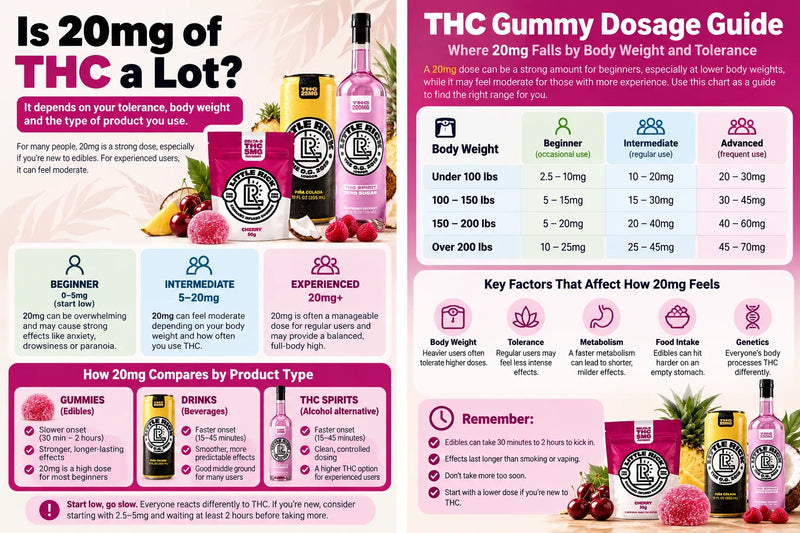
Bebidas con 5 mg de THC, como punto de partida para adultos curiosos por el THC.
-
Bebidas con 10 mg de THC, para consumidores moderados que ya conocen la sensación.
-
Bebidas con 25 mg de THC, para consumidores con experiencia que quieren un viaje más fuerte y completo.
-
Bebidas con 60 mg de THC, la potencia extra alta, para consumidores realmente experimentados y con la agenda libre.
-
Además de gomitas (5 mg, 10 mg y 15 mg) si prefieres los comestibles.
Puedes elegir la lata según el momento. Empieza con algo más ligero si quieres un impulso social suave, sube cuando ya conozcas tu tolerancia y deja las opciones más fuertes para planes de verdad fuera del trabajo.
Preguntas frecuentes
¿Puedo tomar un seltzer con THC en el trabajo?
Normalmente no. A menos que tu empleador lo permita claramente, consumir THC durante el horario laboral puede violar las políticas del trabajo y crear riesgos de trabajar bajo los efectos o de salir positivo en una prueba de drogas.
¿Las bebidas con THC derivado del cáñamo pueden salir en una prueba de drogas?
Sí. El THC derivado del cáñamo sigue siendo THC, y el THC puede aparecer en las pruebas de drogas del trabajo.
¿Puedo tomar THC si trabajo desde casa?
El trabajo remoto no hace que el consumo de THC esté bien automáticamente. La política de tu empleador puede seguir aplicando durante tu horario de trabajo.
¿Puedo tomar una bebida con THC en mi hora de comida?
Es arriesgado. Podrías regresar al trabajo bajo los efectos, y el THC aun así podría causar problemas en una prueba de drogas.
¿Las bebidas con THC se tratan distinto que el alcohol en el trabajo?
Son sustancias distintas, pero ambas pueden afectar tu desempeño. Muchos empleadores prohíben las dos durante el horario laboral.
¿Me pueden despedir por consumir bebidas con THC?
Depende de la política de tu empleador, tu tipo de trabajo, la ley estatal y las reglas de las pruebas. Los puestos de seguridad crítica y los regulados a nivel federal pueden ser especialmente estrictos.
¿Las bebidas con THC son seguras para eventos del trabajo?
No lo des por hecho. Los eventos del trabajo pueden seguir sujetos a la política de la empresa, sobre todo si representas a tu empleador o vas a manejar después.
¿Debería decirle a mi empleador que consumo bebidas con THC?
Depende de tu lugar de trabajo, tu puesto, tu estado y la política. Si hay pruebas de drogas o funciones de seguridad crítica de por medio, considera buscar orientación profesional o legal antes de contarlo o de consumir THC.